
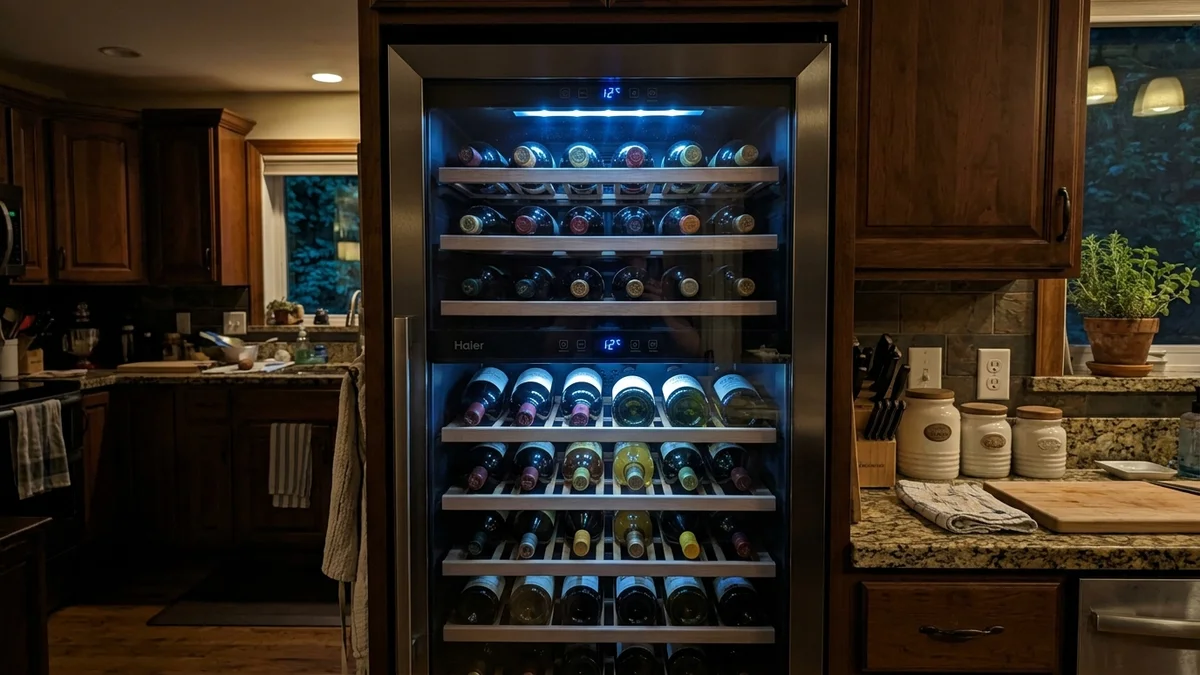
A proper wine cooler cabinet use manual requires allowing a 24-hour settling period before powering on, maintaining 3 to 5 inches of clear space for ventilation, and leveling the unit for maximum vibration reduction. Maintain consistent storage temperatures between 45°F and 65°F and replace the charcoal filter bi-annually to protect your wine collection.
Obsah
- 1 Wine Cooler Cabinet Use Manual: Quick Start & Essential Operating Rules
- 2 Pre-Installation Rules: Settling Period and Unboxing Guidelines
- 3 Proper Placement: Clear Space, Ventilation, and Leveling Feet Adjustment
- 4 Temperature Control & Dual-Zone Setting Procedures
- 5 Loading & Airflow: Optimizing Capacity without Blocking Air Circulation
- 6 Routine Maintenance: Charcoal Filter Replacement and Door Seal Cleaning
- 7 Troubleshooting Common Wine Cabinet Issues: Condensation & Temperature Drops
- 8 Wine Cooler Cabinet Operating FAQ
Wine Cooler Cabinet Use Manual: Quick Start & Essential Operating Rules
A reliable wine cooler cabinet use manual begins with properly unboxing the unit, letting the compressor oil settle, and setting the correct temperature.
You must follow strict operational guidelines to prevent premature hardware failure and protect your vintage bottles.
Before plugging in your expensive cooling unit, what specific setup steps must you complete to prevent catastrophic failure?
Pre-Installation Rules: Settling Period and Unboxing Guidelines
Never plug in a new cooling unit immediately after delivery. You must let the cabinet stand upright for at least 24 hours before turning it on.
This non-negotiable settling period allows the internal compressor oil and coolant (the chemical mixture that extracts heat) to stabilize after transport.
Plugging the unit in too early forces the compressor to run dry, causing irreversible mechanical damage.
- Step 1: Inspect the exterior shipping box for transit damage.
- Step 2: Remove all exterior packaging and interior transport foam carefully.
- Step 3: Check the power cord for crimps or damage before positioning.
- Step 4: Wait 24 hours before plugging the unit into a wall outlet.
Proper Placement: Clear Space, Ventilation, and Leveling Feet Adjustment
Your unit requires a stable, climate-controlled environment to function efficiently.
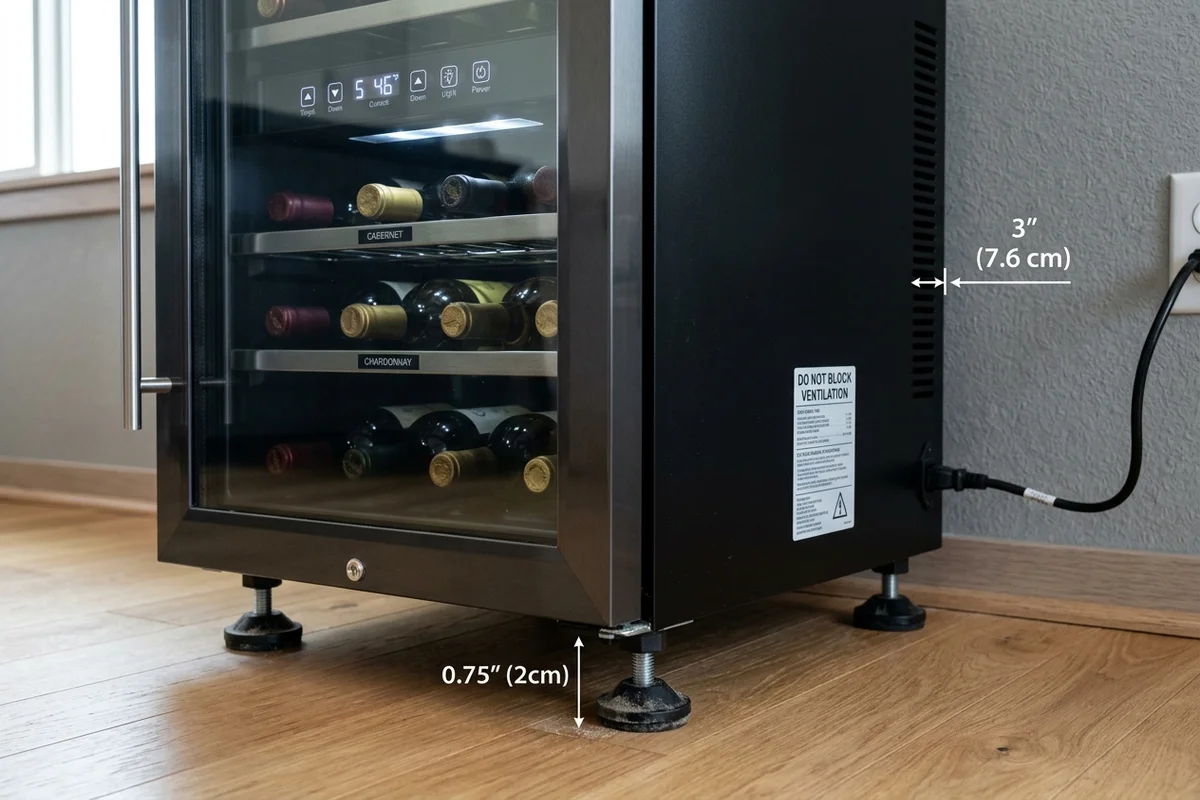
You must leave at least 3 to 5 inches of clear space around freestanding models. This airflow gap prevents the rear ventilation grille (the slatted cover protecting the cooling fan) from overheating.
Always plug the unit directly into a dedicated outlet to eliminate power surge risks.
Next, adjust the bottom leveling feet to ensure the cabinet sits perfectly flat on the floor. Proper leveling guarantees maximum vibration reduction, protecting your wine sediment from constant mechanical disturbance.
Understanding the difference between a wine cooler and cabinet helps clarify why these units need specialized placement. You can also explore compact countertop models if your floor space remains limited.
Temperature Control & Dual-Zone Setting Procedures
Precise climate control dictates how well your wine collection ages over time.
You must maintain a consistent temperature between 45°F and 65°F depending on the varietal. Rapid temperature fluctuations cause corks to expand and contract, pulling damaging oxygen into the bottle.
For serious collectors, setting up dual-zone temperatures allows you to chill white wines up top while keeping reds slightly warmer below. Stable thermal conditions remain the ultimate requirement for successful long-term aging.
| Wine Type / Zone | Target Temp Range | Primary Goal |
|---|---|---|
| Upper Zone (Whites & Sparkling) | 45°F – 52°F (7°C – 11°C) | Optimal serving chill & acidity preservation |
| Lower Zone (Reds) | 55°F – 65°F (13°C – 18°C) | Smooth tannin preservation & ideal serving temp |
| Single Zone (Long-Term Aging) | 55°F (13°C) flat | Universal cellar condition for extended maturation |
Loading & Airflow: Optimizing Capacity without Blocking Air Circulation
Overcrowding your cabinet restricts crucial air circulation around your bottles.
You must leave space between shelves so cold air distributes evenly from the internal evaporator (the component that absorbs internal heat).
Stack bottles horizontally to keep corks moist and maintain ideal relative humidity inside the chamber.
Many premium cabinets feature tinted glass doors to provide essential UV protection against light damage. Never force oversized champagne bottles into standard slots, as this can break shelving brackets and disrupt internal airflow.
Routine Maintenance: Charcoal Filter Replacement and Door Seal Cleaning
Consistent upkeep extends the lifespan of your cooling unit significantly and prevents costly component replacement.
Monthly Maintenance
Clean the rubber door seal monthly using mild detergent and warm water.
A dirty seal creates air leaks, forcing the cooling mechanism to run constantly and wasting electricity.
6-Month Maintenance
Replace the active charcoal filter every six months.
A fresh filter purges volatile organic compounds, preventing stale ambient odors from penetrating porous cork stoppers.
Troubleshooting Common Wine Cabinet Issues: Condensation & Temperature Drops
Unusual moisture buildup usually indicates an active air leak.
Check the magnetic gasket around the door for cracks or debris blocking the closure.
If you notice sudden temperature drops, inspect the rear exhaust fan for heavy dust accumulation. Vacuum the coils gently every three months to ensure efficient heat exchange.
Contact a certified technician immediately if you hear loud grinding noises coming from the lower compressor housing.
Wine Cooler Cabinet Operating FAQ
How long should a wine cooler cabinet stand upright before plugging it in?
After delivery or relocation, let your wine cooler cabinet stand upright for at least 2 to 4 hours—or up to 24 hours if transported horizontally. This critical settling period allows compressor oil and coolant to stabilize, preventing cooling mechanism failure and ensuring smooth, long-term operation.
How do I adjust dual-zone temperatures in a wine cabinet?
Use the digital control panel to adjust each zone separately according to wine type. Set the upper zone between 45°F and 52°F for white and sparkling wines, and the lower zone between 55°F and 65°F for red wines. Maintaining consistent climate control protects corks and preserves flavor. Learn more about setting up dual-zone temperatures.
Why does a freestanding wine cooler cabinet need clear space around it?
Freestanding wine cooler cabinets exhaust heat through rear and side coils. Leaving at least 3 to 5 inches of clear space around the cabinet allows efficient heat dissipation. Poor ventilation causes compressor overheating, increased energy consumption, temperature fluctuations, and premature equipment failure.
How often should I change the charcoal filter in a wine cooler cabinet?
Replace the activated charcoal filter in your wine cooler cabinet every 6 to 12 months. Fresh charcoal filters purge odor-causing volatile organic compounds from circulating air, ensuring clean air circulation that prevents bad smells from penetrating natural cork stoppers during extended bottle aging.
How do leveling feet prevent damage in a wine cabinet?
Adjusting leveling feet ensures your wine cabinet sits completely flat and stable on unlevel flooring. Proper alignment eliminates frame twisting, maintains a tight door seal, prevents condensation leaks, and achieves maximum vibration reduction to protect natural wine sediment from continuous mechanical disturbance.
What is the key difference between a wine cooler and a wine fridge cabinet?
A wine cooler cabinet specifically maintains moderate storage temperatures (45°F–65°F) with humidity control and low vibration for wine preservation. Standard refrigerators operate much colder (35°F–40°F) with low humidity, which dries out corks, oxidizes wine, and causes premature spoilage. For details, see our guide on the difference between a wine cooler and cabinet.
[contact-form-7]
About the MPW Wine Editorial Team
Written by the MPW Wine Editorial Team. Our specialists provide expert guidance on wine storage, cellar maintenance, and wine appliance care.
Editorial Note: This article was prepared by our editorial team. We use AI tools to assist with initial research and structure, but all content is thoroughly reviewed, fact-checked, and edited by human wine specialists to ensure accurate, reliable information.
Get our latest guides, news, and insights highlighted in your Google Search & AI Overviews.