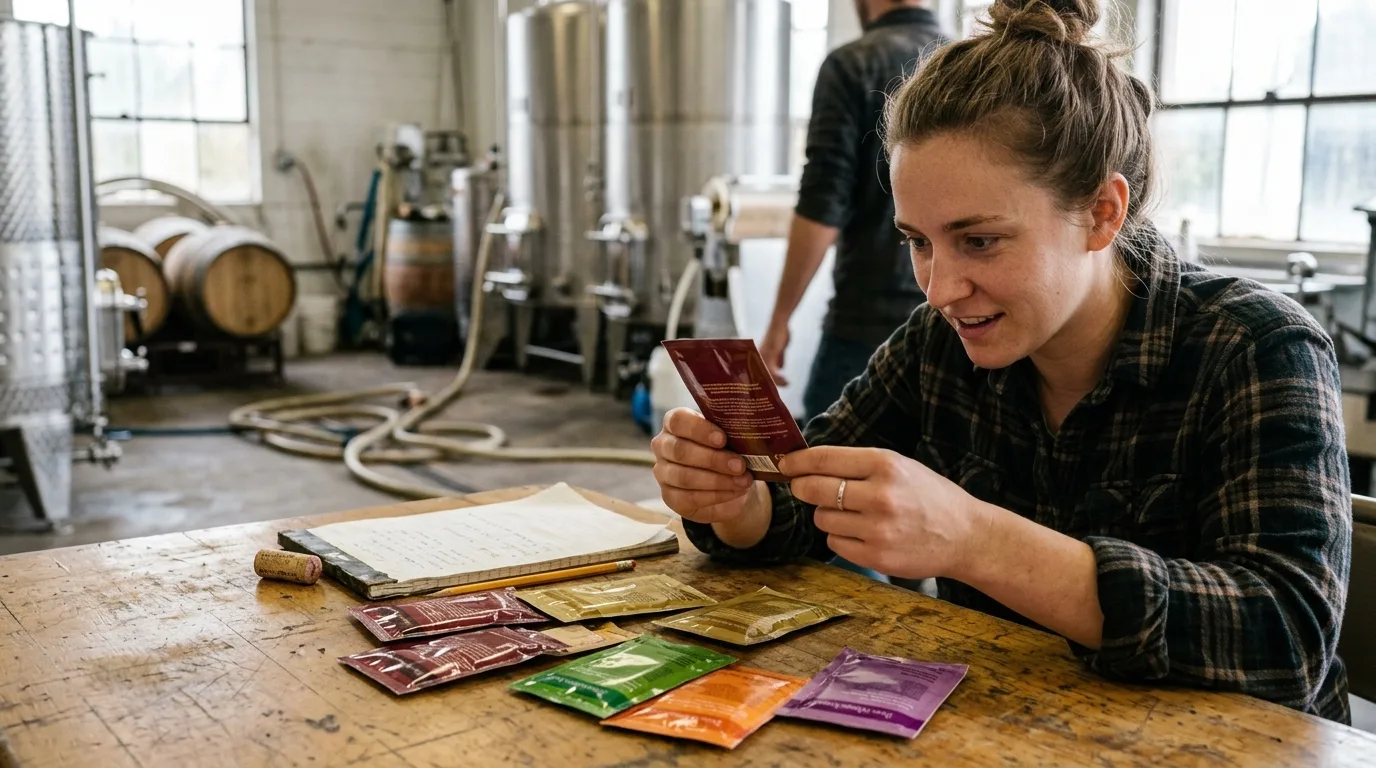
If you just searched „home made red wine too much yeast,“ you likely realized you added double or triple the recommended dose and expect your batch to be ruined.
We have all stood over a bucket of crushed grapes, staring at a massive, foaming mess, wondering if we just created a volcano instead of a vintage.
The panic of accidentally dumping extra yeast packets is a rite of passage for home winemakers. You might envision terrible off-flavors, exploding bottles, or a totally failed batch.
But before you pour that dark red liquid down the drain, you need to know a counterintuitive truth about yeast biology. The massive colony you just pitched into your juice is hiding a secret that might actually save your wine.
Over-pitching yeast rarely ruins homemade red wine. Extra yeast simply accelerates initial fermentation without increasing final alcohol content. The main requirement is prompt racking to remove the thicker layer of sediment before off-flavors develop.
Obsah
- 1 What Happens If You Add Too Much Yeast to Homemade Red Wine?
- 2 Understanding Over-Pitching and Yeast Cells in Red Wine Fermentation
- 3 The Real Risks: Excess Sediment, Off-Flavors, and Yeast Autolysis
- 4 Step-by-Step Racking Guide: How to Clear Excess Lees and Sediment
- 5 Managing Active Fermentation, Headspace, and Airlock Safety
- 6 Common Over-Yeasting Myths vs. Winemaking Reality
- 7 Conclusion: Saving Your Homemade Red Wine Batch
- 8 Frequently Asked Questions
What Happens If You Add Too Much Yeast to Homemade Red Wine?
Over-pitching yeast rarely ruins homemade red wine. The extra yeast simply accelerates the initial stages of fermentation, meaning your batch will start bubbling faster and finish primary fermentation sooner.
Because yeast colonies reproduce based on available sugar rather than the initial amount pitched, the final alcohol content remains exactly the same.
The primary consequence of adding too much yeast is a thicker layer of sediment at the bottom of your vessel, which requires prompt removal to maintain a clean flavor profile.

Understanding Over-Pitching and Yeast Cells in Red Wine Fermentation
When you introduce excess yeast cells into the grape must, they immediately begin a rapid reproduction phase. A massive initial dose simply means the colony reaches peak population much faster.
During active fermentation, sugar consumption happens at a blistering pace. The hungry yeast devour the available sugars and convert them into alcohol and carbon dioxide.
For a deeper dive into this biological process, understanding yeast fermentation dynamics helps clarify why an enormous starting population stabilizes itself based purely on the food supply.
The Real Risks: Excess Sediment, Off-Flavors, and Yeast Autolysis
While your wine is generally safe, massive yeast colonies bring specific challenges that winemakers must manage.
The most immediate threat is severe nutrient depletion. Because so many yeast cells compete for limited nitrogen and vitamins, the yeast can become stressed, occasionally producing faint sulfur odors.
Once the sugar runs out, this massive population dies and falls to the bottom, creating an unusually thick layer of sediment known as lees.
If you leave your wine sitting on this thick sludge for months, the dead cells break down in a process called autolysis. Severe autolysis releases bitter, rubbery, or intensely yeasty off-flavors that permanently taint the wine.
Do not leave your red wine resting on thick primary lees for extended months. Racking within 1-2 weeks post-fermentation prevents dead yeast cell breakdown and preserves fresh wine quality.
Step-by-Step Racking Guide: How to Clear Excess Lees and Sediment
To prevent off-flavors, you must separate the wine from dead yeast cells quickly. The solution is racking.
Follow these simple steps once active fermentation slows down:
- Monitor Fermentation: Wait until the furious bubbling stops and solids settle to the bottom.
- Sanitize Equipment: Prepare a clean secondary fermenter and a sanitized racking siphon.
- Siphon Carefully: Position the siphon tip 1 to 2 inches above the heavy lees layer at the bottom.
- Transfer Clear Wine: Siphon the clear red wine into your secondary vessel without disturbing the sludge.
- Repeat if Necessary: If a thin dusting of yeast settles again after several weeks, perform a quick secondary racking.
| Fermentation Stage | Yeast Behavior | Recommended Action |
|---|---|---|
| Active Fermentation | Vigorous sugar consumption & foaming | Maintain 20% headspace & check airlock |
| Post-Fermentation (Week 1-2) | Yeast cells die & settle as thick lees | First racking into secondary fermenter |
| Secondary Aging (Month 1-2) | Fine particles settle out slowly | Secondary racking prior to bottling |
Managing Active Fermentation, Headspace, and Airlock Safety
An oversized yeast colony creates aggressive, violent bubbling during the first few days of fermentation.
This intense activity requires adequate headspace in your fermenter to prevent foaming must from overflowing.
If foam pushes up into your airlock, it can clog the release valve and potentially blow the airlock straight off the lid.
To prevent a messy blowout, leave at least 20% empty headspace at the top of your fermentation container.
Learning how yeast behaves during fermentation ensures you anticipate this vigorous initial push and monitor the airlock closely.
Common Over-Yeasting Myths vs. Winemaking Reality
Mistakes happen, but common misconceptions often cause more panic than necessary. Here is what actually happens when you over-pitch yeast:
- Myth 1: Extra yeast produces higher alcohol levels.
- Myth 2: The wine will taste permanently like bread dough.
- Myth 3: The entire batch is completely spoiled and must be dumped.
- Reality 1: Alcohol depends strictly on available sugar in the must.
- Reality 2: Prompt racking preserves bright, fruit-forward flavors.
- Reality 3: Over-pitching simply speeds up primary fermentation.
As long as you siphon the wine off sediment in a timely manner, you can look forward to enjoying your homemade wine rather than stressing over minor pitch errors.
Conclusion: Saving Your Homemade Red Wine Batch
Adding excess yeast to your homemade red wine feels like a major mistake, but it is entirely fixable.
By managing aggressive early foam, maintaining proper airlock space, and racking away from thick lees promptly, you avoid autolysis and preserve delicate fruit flavors.
Trust the fermentation process, intervene only when necessary to siphon off sediment, and look forward to bottling a clean, delicious vintage.
Frequently Asked Questions
Will adding too much yeast ruin my homemade red wine?
No, adding too much yeast will not ruin your homemade red wine. Yeast cells multiply based on available sugars, not the initial pitching quantity. Excess yeast simply accelerates initial fermentation, though it produces more sediment and lees that require prompt racking to prevent off-flavors from autolysis.
What happens if you over-pitch yeast in wine fermentation?
Over-pitching yeast causes rapid sugar consumption and intense initial foam in your fermenter. While fermentation finishes faster, the large colony depletes nutrients quickly. Once active fermentation subsides, excess dead yeast cells settle at the bottom as thick lees, which should be siphoned out during racking.
Does extra yeast increase the alcohol content in homemade wine?
Adding extra yeast does not increase the alcohol content of your homemade red wine. The final alcohol level is determined strictly by the initial sugar concentration in the grape must and the alcohol tolerance of the yeast strain, not by the amount of yeast pitched.
How do you fix homemade red wine with too much yeast sediment?
To fix wine with heavy yeast sediment, allow active fermentation to complete and let the yeast settle. Carefully siphon the clear wine into a clean secondary fermenter, leaving the thick lees behind. Repeat racking after several weeks if additional yeast sediment accumulates before bottling.
Can over-yeasted wine cause bad tastes or yeast autolysis?
Over-yeasted wine can develop bitter, rubbery, or yeasty off-flavors if left resting on dead yeast cells for extended months. This process, called autolysis, occurs when yeast cells break down. Racking your red wine off thick sediment after primary fermentation prevents autolysis completely.
How long should I leave red wine on the lees after over-pitching?
After over-pitching, rack your red wine off the heavy primary lees within one to two weeks after active fermentation ends. While fine lees aging benefits some wines, dense primary sediment should be removed promptly using a siphon to maintain fresh fruit flavors and clarity.
Master Home Winemaking
Master home winemaking and troubleshoot fermentation issues like a pro! Subscribe to our newsletter for expert tips, troubleshooting guides, and recipe formulas.